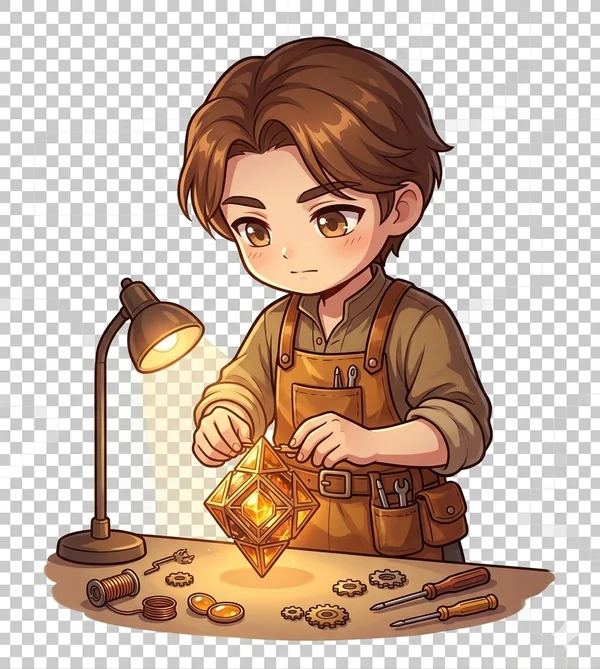
The Craftsman
The Craftsman is the quiet backbone of any organisation — introverted, practical, deeply empathetic, and committed to doing things right. They are not drawn to the spotlight; they are drawn to the work itself. Their care is embedded in every careful choice, every reliably-delivered commitment.
Signature strengths
The core challenge
The Craftsman's commitment to others can come at a cost to themselves. They may neglect their own needs, resist necessary change, or avoid difficult conversations that could improve relationships.
How others experience you
Others experience the Craftsman as someone who makes the whole team's work better simply by being involved. Their standards are contagious.
Communication style
Measured, honest, and grounded in concrete reality. The Craftsman has little patience for abstraction and communicates through examples, demonstrations, and results. Best approached with: evidence of genuine care for quality. They respect people who take their work seriously.
Under pressure
The Craftsman makes careful, quality-oriented decisions under pressure — sometimes slower than the situation demands. They are anchored by a clear internal standard of what constitutes good work.
Stress response
The Craftsman under stress focuses on the work itself — retreating into quality and craft as a stabilising force. They become less communicative and more absorbed. Recovery comes through completing something well, which restores their sense of competence and groundedness.
The shadow side
The shadow Craftsman becomes The Doormat — absorbing others' needs without limit, avoiding necessary conflict, and quietly accumulating resentment that eventually surfaces as withdrawal or passive resistance.
Often underestimated because they do not self-promote and prefer showing over telling. Their work speaks — but in environments that reward visibility, the Craftsman's contribution can go unrecognised.
What this does not mean
Being a Craftsman does not mean you are limited in scope or lacking ambition. It means your ambition expresses itself through mastery rather than scale — and the things you make tend to outlast the things made by those who moved faster.
At work
Thrives in healthcare, teaching, administrative support, social work, interior design, childcare, and any role where care, precision, and consistent delivery matter more than visibility.
Workplace habits
Quietly indispensable. The Craftsman is the person who makes sure everything actually works — the one who follows up, who fills gaps, who ensures that the people who need support have it. Thrives in caring, collaborative environments. May under-advocate for themselves in organisations that reward self-promotion.
Career paths that fit
In leadership
Operational leaders who create deeply loyal, well-cared-for teams. Exceptional at ensuring no one is left behind. Their challenge is giving direct feedback and making the hard calls that their care for individuals makes difficult.
In relationships
Among the most attentive and devoted partners. They remember every detail of a partner's needs, anticipate before being asked, and give consistently without requiring acknowledgment. Their risk is neglecting their own needs until the deficit becomes a crisis. They need a partner who actively notices and reciprocates.
As a romantic partner
The Craftsman is among the most attentive and quietly devoted partners. They pay extraordinary attention to what matters to their partner and act on it consistently — not through grand gestures but through the daily accumulation of care. They need a partner who notices and reciprocates their investment, and who does not mistake their quietness for lack of feeling.
As a friend
Warm, reliable, and extraordinarily attentive. The Craftsman remembers every detail about the people they care about and acts on that knowledge in ways that make people feel genuinely valued. Their friendships are few but deep, and their loyalty — once given — rarely wavers.
As a parent
Deeply nurturing parents who create homes of warmth, safety, and consistent care. Their children grow up knowing they are loved in practical, tangible ways. Their challenge is allowing children to struggle appropriately — the Craftsman's instinct to protect can sometimes prevent the challenges that build genuine resilience.
Natural allies and growth edges
The Curator (SHEB) provides intellectual challenge that prevents the Craftsman from becoming too comfortable; The Vanguard (SGEB) models decisive action and healthy directness.
Growth pairing
Paired with The Conductor (SGHB): the Conductor's willingness to hold high standards and give clear direction models for the Craftsman that honest expectation-setting is itself a form of care.
Commonly mistaken for
Frequently confused with The Nurturer (EGHF). Key difference: the Craftsman is practical and grounded in the present real world; the Nurturer is intuitive and oriented toward future potential and meaning. Both care deeply — their difference is the lens through which care is expressed.